
News · 12 July 2026
In Conversation with Adam Preston
Writer and performer Adam Preston on opening night disasters, meticulous research, and why he couldn't wait to bring Nelson back to Chiswick.
After a completely sold-out run and a Standing Ovation Award nomination earlier this year, Horatio Nelson: Fever and Fire returns to the Tabard Theatre from 8–12 September.
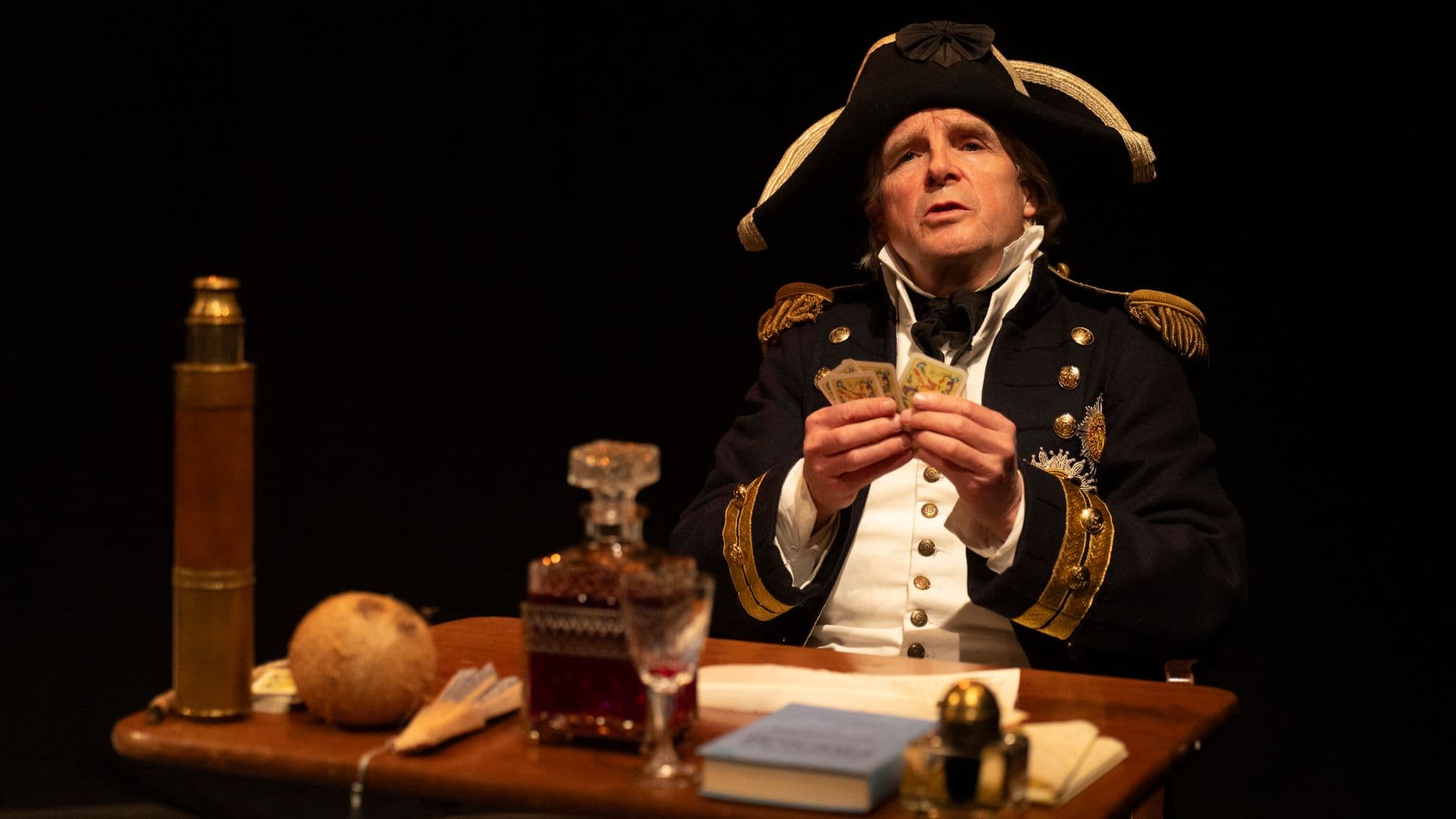
Written and performed by Adam Preston, this acclaimed one-man show brings Britain's greatest naval hero vividly to life, revealing the triumphs, scandals and personal relationships behind the legend. Ahead of the show's return, we caught up with Adam to discuss the play's remarkable premiere, the painstaking historical research behind the script, recreating Nelson's iconic uniform, and why he couldn't resist bringing the production back to Chiswick.
Read on to discover how a bleeding hand on opening night almost derailed the performance, why Nelson's life makes "one of the greatest true stories from all of history", and why Adam believes the Tabard is the perfect home for the production.
The play had its premiere at the Tabard in April - how did it go?
On the first night I cut my hand quite badly within two minutes of the start. I was bleeding onto the stage and was sure the audience were aware of it. I got wonderful applause but when I came off stage I was convinced they were applauding me for soldiering on with my wound!
And were they?
That was the night all the reviewers were in and they wrote unbelievably positive reviews - I was completely taken aback (to use a nautical phrase). The show was even nominated for a Standing Ovation Award. Nobody had noticed the bleeding hand because they were in the grip of this amazing story! So going into the second night I had this sense that I could enjoy myself. The whole run was an absolute delight and completely sold out.
What do you think audiences were responding to?
We go to the theatre in search of great stories. For a lot of people Nelson has been reduced to his column in Trafalgar Square and his death scene, but his life is one of the greatest true stories from all of history. It’s a staggering tale - the early struggles, his impact, his genius, the cheering mobs, the scandals, the battles, the wounds - it makes great theatre!
How did you go about writing the show?
I’ve been studying this subject for years, I’m extremely knowledgeable about Nelson and all the characters associated with him - such as his wife Fanny, his lover Emma Hamilton and her Husband Sir William, Nelson’s ‘band of brothers’ and all these colourful periphery characters. All these amazing people were all writing to each other and a vast amount of that material survives. To write the play I dove into that treasure trove of sources and used their voices. The language is crystal clear but elegant and evocative of a lost age.
How did you get the costumes for the show?
Dougie Hawkes is one of the U.K’s leading period costume designers. He’s just won the Prime Time Emmy for Bridgerton. He happens to be a near neighbour and he threw himself into creating an authentic uniform for Nelson. He brought in amazing people like Sarah Blackmore who made the bicorn. Nelson’s jacket is an exact replica of the one he was shot in at Trafalgar and was made by Darcy Clothing in Lewes. They sourced the material from the same company that made the uniforms at Waterloo - they’re still going! The sheer quality inspired me to up my game across the board. I spent months hunting down all the props and I decided I couldn’t bare to wear a wig when everything else is so authentic, so I opted to dye my hair Nelson’s platinum blonde. That’s my great sacrifice for art!
Has playing the part of Nelson changed the way you think about him?
Playing him on stage has given me a deeper insight into his psychology, which is what I explore in the text anyway. This is someone who is driven to achieve and I have a better understanding of the engine that is driving that. There are well-worn anecdotes about Nelson’s childhood, which sound suspiciously like retroactively engineered tales emphasising his courage, but there’s an elephant in the room and I embrace that elephant. I’ve taken a leap of imagination based on facts and I believe it pays dividends because the audiences understand why he is doing everything he is doing, and they feel for him.
You have a soundscape that accompanies the show - how does that work?
A very experienced sound designer, Amanda Priestley, who has done a lot for the BBC, sourced hundreds of sounds to evoke the era and bring the action to life. I have a brilliant technician called Nat Green, who also designed the very evocative lighting. In some scenes, like the Battle of Cape St Vincent, Nat is live cueing multiple light and sound cues per second, and his hands are moving like a concert pianist! It’s fantastic to know he’s making it all happen. I don’t need to worry and can just throw myself into the performance.
Why are you bringing the show back to the Tabard?
After the April run I was asked to take the show on a tour of East Anglia, which is happening in October, and it looks like I will be doing a run at one of the theatres at the Historic Dockyard Museum in Portsmouth. There are also performances planned in Bristol and Rye. But when the wonderful Simon and Sarah Reilly, who run the Tabard, asked me to bring it back, I held off all the other offers until the Tabard dates were confirmed. They took a huge gamble in putting the show on, based entirely on my pitch, and their instincts were spot on. It’s going to be such a joy to bring the show back to this wonderful space. The Tabard is an absolute gem of a venue, and Chiswick is glorious!
What has been your favourite reaction to the show?
There’s a line I particularly loved in Harry Speirs review for the London Pub Theatre Magazine. He said, “it’s the often-forgotten women in Nelson’s life that construct the most attractive and powerful element in this play…Preston’s script make them the driving forces leading him towards success” I love that because it means I must be bringing those women to life - which is something I didn’t necessarily think I would be able to do!
Horatio Nelson: Fever and Fire plays 8th to 12th September. Book tickets here.